A WINE ELSE FIELD BRIEFING
Roussillon sits in a compelling position between sea, mountains and the Spanish border. It is a place of exposed vineyards, terraces, diverse soils and a living Catalan cultural inheritance. For a US buyer unfamiliar with the area, the names may first appear as a cluster on a map. Their wines reward a more careful reading.
Dry wines, sweet fortified traditions and individual producer identities belong in separate conversations. The purpose of this page is not to promise access to a list of estates. It is to help a licensed importer, distributor or sommelier understand what questions to ask when discovering Roussillon.
A distinct geography for a distinct wine conversation
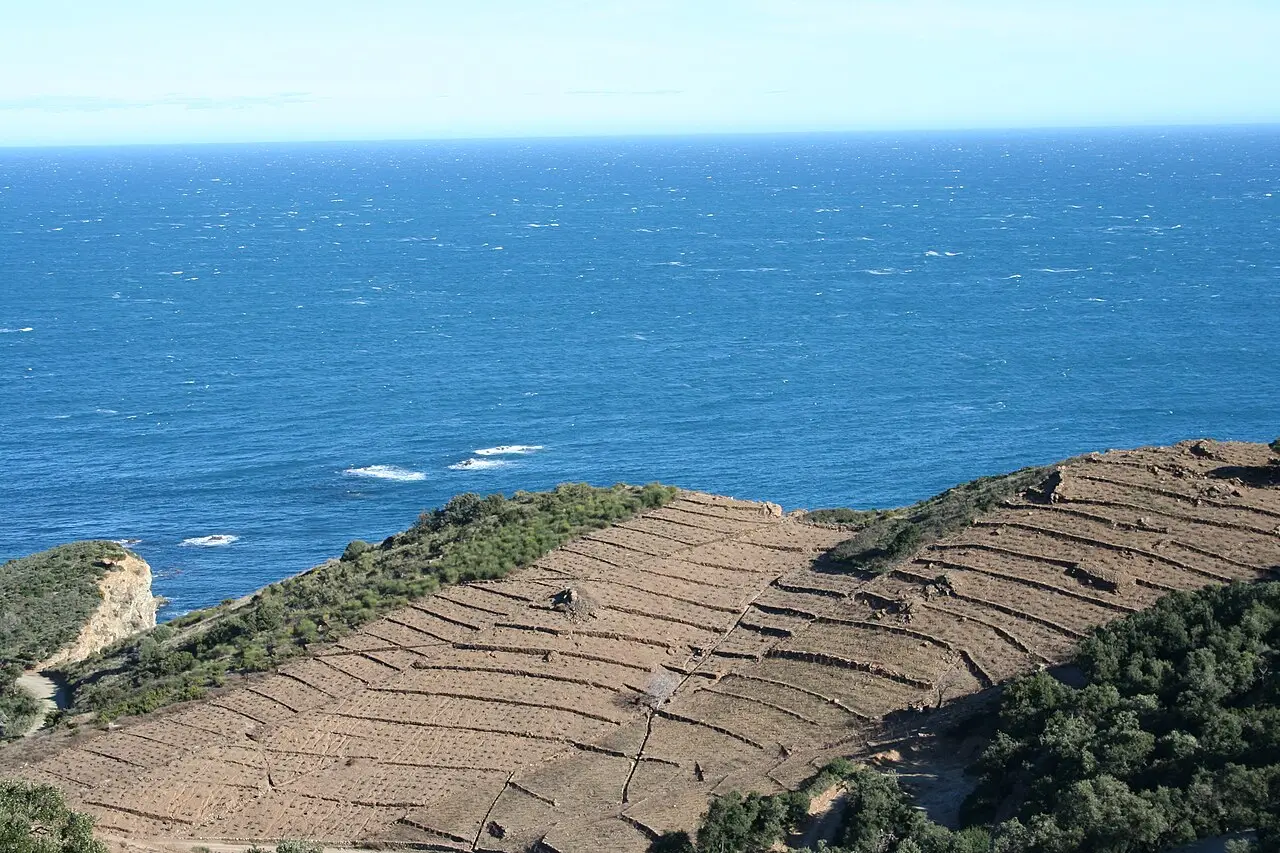
In Roussillon, proximity to the Mediterranean and the Pyrenean foothills can create sharply contrasting vineyard settings. Coastal terraces around Collioure and Banyuls are visually memorable, but their significance is more than photographic. Steep sites, exposure, wind, water availability and the choices of individual growers can affect farming realities. Inland landscapes tell different stories; no single photograph stands for every estate.
This is also a cultural landscape. Catalan influences appear in place names, food traditions and the wider history of the borderlands. Used carefully, these details can help a restaurant or shop introduce a wine to American customers. Used carelessly, the same details become empty romantic adjectives. The difference is attribution and specificity.
WINE ELSE began with the desire to share the human and artistic stories of this part of southern France. Our project now includes wider Occitanie, but Roussillon remains an especially meaningful lens through which to explain what a wine place can be.
The coastline makes a first impression; a precise producer story makes it memorable.
Dry wines: look beyond the color on the shelf
Roussillon is known for reds, whites and rosés as well as its historic fortified wines. Buyers should separate these categories at the start. A dry red from a specific Côtes du Roussillon context may be very different from a coastal Collioure bottling. Grape selection, vineyard location, cellar practices and vintage remain essential to any accurate description.
Grenache, Syrah, Carignan and Mourvèdre often appear in discussions of the region's red wines, while regional whites can involve Grenache Blanc, Grenache Gris, Macabeu and other permitted varieties depending on the designation. These are useful educational signals, not a promise that any producer uses a particular combination.
A sommelier's evaluation should include actual tasting, menu fit and service application. An importer's evaluation should additionally consider documentation, commercial authority, label compliance and whether the estate wishes to develop the contemplated market. It is perfectly legitimate for a compelling wine to remain unavailable to a proposed buyer.
Distinguish dry wines by actual appellation, wine and producer rather than treating Roussillon as a monolith.
Banyuls, Maury and Rivesaltes: fortified traditions
Roussillon's vins doux naturels offer a category that can be unfamiliar to some US buyers. They are not simply 'sweet reds.' Styles differ across protected designations, varieties, winemaking and aging methods. In the case of Rivesaltes, the INAO explains mutage: the addition of wine-derived alcohol during winemaking to interrupt fermentation while retaining some natural grape sugar.
The distinction between reductively aged and oxidatively aged expressions matters for both educational content and service. A Rivesaltes grenat and an amber or tawny-style expression should not be marketed as interchangeable. The range offers a conversation about sensory profile, food use, service occasion and bottle presentation rather than an undifferentiated dessert-wine category.
Banyuls and Maury likewise deserve direct reference to the exact producer and appellation documentation. Some names encompass more than one style or product context. For a buying brief, identify sweetness, declared alcohol, current bottling and intended channel, then confirm the relevant protected designation rather than relying on a generic label or historic summary.
For vins doux naturels, style and aging information can be as important as appellation name.
Why these stories can be valuable in the United States
An American specialist retailer may find that a narrowly explained fortified wine creates a more useful discovery moment than a broad statement about rare French bottles. A wine director may use a dry Collioure or a distinctive Roussillon white to add a geographic contrast to a list. The relevant measure is the specific account's needs, not a sweeping claim about the entire American market.
A persuasive trade narrative can be built from verified details: the estate's own explanation of a site, the actual grape varieties, an accurate description of the appellation, a production decision that shaped the wine, and a photograph that documents the place rather than merely decorating the page. Our editorial role is to organize that information clearly when it is available.
It would be irresponsible to infer that a regional story proves a producer is export-ready. An actual trade relationship depends on interest, available product, authorized counterparties and compliance in the intended US market. WINE ELSE is designed to support discovery, not replace those steps.
A strong specialty category deserves precise language and actual market testing.
Three ways to structure a Roussillon discovery brief
For a restaurant: state whether you need a dry red, a textured white, an aperitif-style wine or a fortified selection for cheese and dessert. Include cuisine, desired by-the-glass or bottle placement, price positioning and whether staff training materials are important. Ask for a specific wine rather than a region-wide recommendation without context.
For retail: explain the customer you aim to serve. Do shoppers already recognize Banyuls or Rivesaltes? Is the objective an introduction to Mediterranean dry reds or an educational tasting around fortified wine traditions? Request photos, producer statements and technical sheets only through a verified source and with permission to use them.
For import or distribution: add operating states, existing portfolios, channel mix, possible minimum allocations, need for label review and applicable license arrangements. Request commercial terms from the legitimate seller. The first objective is to establish a conversation that neither side has to retract.
A buyer who can articulate the end customer is more useful to a producer than one asking for every price list.
How WINE ELSE approaches the producer's voice
Our philosophy — the winemaker is the artist and the cuvée is the work — becomes meaningful only when a real person is willing to tell their story. When an estate agrees, a portrait should include direct producer words, specific photographs, reliable technical context and clear editorial attribution. The producer keeps authority over the wine, its commercial details and its brand.
Where we have not obtained approval, we publish regional explanations instead. We never imply that a winery is a partner simply because it operates in an appellation we admire. Images used to illustrate a landscape are labeled as such, not passed off as portraits of an unnamed partner estate.
The same restraint applies to certifications, awards, history and sustainability. A striking piece of prose is not a substitute for proof. Professional readers need to know which elements are observation, which are producer testimony and which are official designations.
Respect for the grower is the beginning of credible international storytelling.
Continue your Roussillon research
Start with our Roussillon regional feature to locate key landscapes and appellations, then visit Winepedia for historical context. Look up protected designations in the INAO database and inspect the producer's own materials before quoting technical or market information. Our French wine journal provides broader explanations that connect the region to the rest of Occitanie.
If you represent a US wine business, you can contact WINE ELSE with a concise introduction: who you are, where you operate, what style or channel interests you and whether you already have a licensed import route. We will never present that introductory message as an offer to buy or sell wine.
Learn the land; verify the wine; then explore the possibility of a genuine relationship.
A focused message makes the difference.
- Tell us your company, professional role and US operating state.
- Specify your channel and the wine styles or appellations of interest.
- Explain whether you already work with a licensed import partner.
- Ask for an introduction, not a fictional catalog or guaranteed allocation.
Editorial research · 11-minute regional briefing · Reviewed 16 October 2026 · WINE ELSE editorial team